The ESPORTS native token on the BNB Smart Chain was left decimated after an organized dump from wallets allegedly linked to project insiders. Only two hours later, the value of the token fell by over 90%, sparking confusion in the crypto community and immediate alarm bells about internal governance and transparency. On-chain data accurately identifies the spark for the liquidation event at 18:18, triggering a savage sell down. When the dust settled, around 178 million 12.76 million. Real-time tracking of wallet activity by crypto analysts provided early clues, with comprehensive accounts making rounds after publication via X. This report showed
The post ESPORTS Token Collapse: Team-Linked Wallets Trigger $12.7M Sell-Off in Two Hours appeared first on The Merkle News.
]]>The suspicious DSJ Exchange (DSJEX) and BG Wealth Sharing scheme, now confirmed a Ponzi operation, has collapsed after illegally siphoning over $150 million from victims since appearing in 2025. Thorough on-chain analysis of this investigation revealed extensive laundering activity, hundreds of millions in cross-chain asset transfers, and a concerted effort to disguise transaction histories. Although the structure of this scheme was relatively simple, its large scale tells a darker story: thousands of people, many recruited through social media, were seduced. This case is different not only because of the huge amount of cash but also due to the fact that
The post $150M Crypto Ponzi Scheme Crumbles, Forming Global Fraud Network As Investigators Freeze $41.5M appeared first on The Merkle News.
]]>
A fake hardware wallet bought via TikTok led to a $6.9-million crypto theft; hackers are now targeting devices meant to keep funds safe.
]]>
Honeypot scams lure crypto investors into buying tokens they can’t sell, locking their funds through smart contract tricks.
]]>
What is a digital twin?
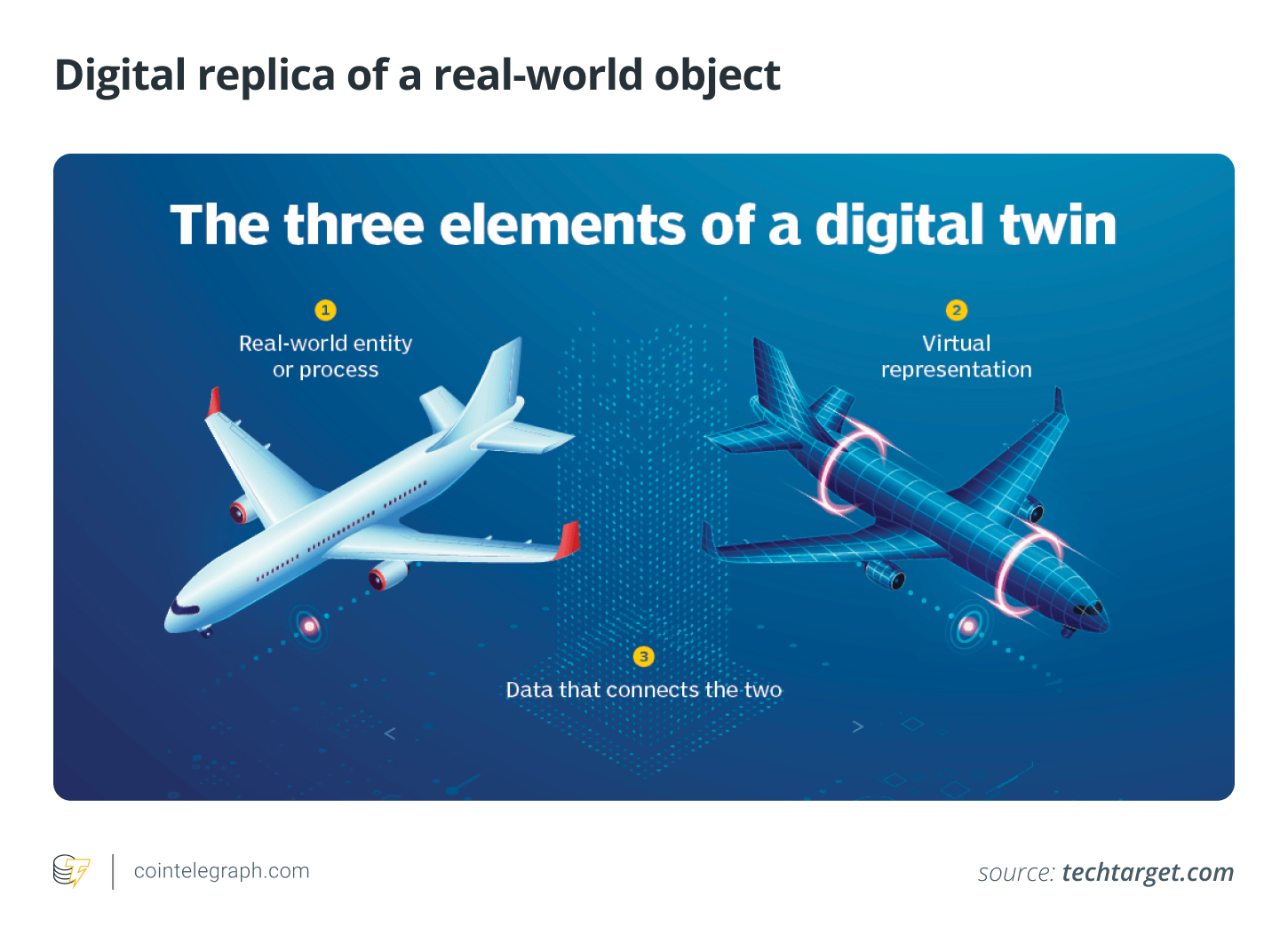
A digital twin is a virtual model or replica of a physical object, system or process. It’s like a digital mirror, allowing us to simulate, monitor and predict the behavior of real-world entities in real-time.
These virtual counterparts are designed to pull data from physical sensors or inputs, providing a continuous feedback loop that helps with analysis, optimization and decision-making. Digital twins can represent almost anything, from machinery in a manufacturing plant to human behavior or entire cities.
In industries like healthcare, automotive, manufacturing and urban planning, digital twins allow for better resource management, predictive maintenance and more accurate simulations before physical changes are made. In essence, they help prevent costly mistakes by modeling complex systems in the virtual world before implementing them in the real world.
Digital twins have taken on a darker role in the blockchain and cryptocurrency sectors. Cybercriminals use digital twin technology rather than simulating physical objects to create synthetic identities, replicas of real individuals, often derived from stolen data. These digital copies are then used to infiltrate online communities, impersonate influencers or executives, or manipulate systems for financial gain.
How cybercriminals weaponize digital twins to scam crypto users
In the crypto world, where anonymity and trustless transactions reign supreme, digital twins have emerged as a potent tool for cybercriminals to exploit. Scammers can take advantage of the decentralized, unregulated nature of crypto platforms to perpetrate these frauds.

Here’s a deeper look at how scammers weaponize digital twins:
- Identity cloning: Cybercriminals gather personal data from social media, data breaches and other online sources to create a highly accurate digital twin of a real person. This might include images, voice recordings, writing style and even behavioral patterns. Once the digital twin is created, it can be used to impersonate individuals and gain trust from others in the crypto community.
- Fake influencers or advisers: Crypto influencers, who often command significant trust and attention, are prime targets for digital twin scams. By replicating their speech patterns, mannerisms and even generating deepfake videos, scammers can pose as trusted personalities in the space. These fake versions may promote fraudulent investment schemes, fake tokens or manipulate users into sending crypto to scam wallets.
- Synthetic KYC (Know Your Customer) scams: Some digital twins are created to bypass KYC processes on exchanges or decentralized finance (DeFi) platforms. Attackers can generate fake identities and provide forged documents or images to appear legitimate, gaining access to accounts or executing unauthorized transactions. This can enable criminals to launder stolen funds or impersonate legitimate traders.
- Phishing with personalization: Phishing scams in the crypto space often target individuals with highly personalized messages. When a scammer creates a digital twin of a known figure, they can tailor their communications to appear more convincing. By using these personalized messages, they trick victims into clicking on malicious links, giving away private keys or downloading harmful software.
Did you know? In 2023, a Hong Kong finance employee was tricked into transferring $25 million after joining a video call with what turned out to be deepfake versions of their colleagues, generated using publicly available footage.
Examples of digital twin-related scams in crypto
While digital twin scams in crypto might sound futuristic, they’re already happening, and AI is a big part of the problem. These scams don’t always rely on evil digital twins alone; many use deepfake videos, AI-generated profiles and hallucinated interfaces to deceive users.
Here are some real-world examples:
- Deepfake CEO scam defrauds chief financial officer via video call: In a sophisticated attack, scammers created digital avatars of a company’s CEO and executives using publicly available video materials. They conducted a video call with the company’s chief financial officer, convincing him to transfer funds under false pretenses. The digital twins were so convincing that the executive did not suspect foul play during the call.
- UI spoofing mimics trusted crypto platforms: Cybercriminals have employed UI spoofing to create near-perfect replicas of legitimate cryptocurrency platforms. These counterfeit interfaces trick users into entering sensitive information or making transactions, believing they are interacting with the real platform. The high fidelity of these digital twins makes them particularly dangerous, as they can bypass traditional security measures.
- AdmiralsFX scam uses deepfakes to lure investors: A large-scale scam operated by a call center in Tbilisi, Georgia, used deepfake videos of celebrities to promote a fraudulent cryptocurrency investment platform called AdmiralsFX. Victims were shown AI-generated videos of public figures endorsing the platform, leading them to invest substantial amounts of money. The operation defrauded over 6,000 individuals, highlighting the potent combination of deepfake technology and social engineering.
How to spot interactions with evil digital twins: 6 Red flags
Digital twin scams rely on sophisticated impersonation techniques, and scammers often use synthetic identities to build trust and manipulate their targets.
To help you stay alert, here are six red flags that can help you identify interactions with synthetic identities. Watch for these warning signs to protect yourself from falling victim to fraud.

Digital twin scams in crypto often hide behind polished, AI-generated responses that sound perfect but lack authenticity. If someone avoids live video calls and instead offers pre-recorded clips or deepfakes, be skeptical. Real people show up.
Scammers frequently use urgency, pushing you to act fast with phrases like “limited offer” to bypass your judgment. One major red flag is receiving unverified crypto requests via DMs — legit professionals don’t do that. Always check profiles for inconsistencies like low follower counts or recent creation dates.
Finally, be wary if someone insists on sticking to one platform and refuses to switch to secure or verified channels. These tactics combined often signal a coordinated scam using digital twin or AI deception.
Did you know? Unlike traditional simulations, digital twins are dynamic virtual environments powered by real-time data. While a simulation models one process, a digital twin can run multiple simulations at once, constantly learning and adapting through a live feedback loop.
Can blockchain help prevent digital twin-powered crypto scams?
While blockchain technology is often targeted by cybercriminals due to its decentralized and pseudonymous nature, it also holds the potential to offer powerful solutions for combating digital twin-based scams.
Blockchain, with its transparent and immutable features, provides unique tools that can help verify identities and secure transactions, making it harder for scammers to manipulate the system. Leveraging blockchain’s capabilities introduces robust security layers that verify the legitimacy of interactions, helping reduce fraud, identity theft and digital impersonation.
- Onchain identity verification: One of the most important developments in blockchain technology is the concept of decentralized identity (DID). With DID, individuals can verify their identity on the blockchain without relying on centralized authorities. This ensures that scammers cannot create synthetic identities without being detected. Blockchain provides a transparent, secure and verifiable system for managing identities, reducing the risk of impersonation.
- NFT identity markers: Some platforms use non-fungible tokens (NFT) as a form of digital identity. NFTs are unique and traceable on the blockchain, which makes it much harder to clone someone’s identity. If you’re engaging with a person who has a verified NFT identity, you can be more confident that they are who they claim to be.
- Immutable audit trails: Every transaction on the blockchain is permanently recorded and timestamped. This means that if someone tries to impersonate another person or create a fraudulent identity, their actions leave a trace. If a synthetic identity is used to scam individuals, the blockchain’s audit trail can help authorities track the perpetrator.
- Smart contract protections: Smart contracts on blockchain can be used to implement certain safeguards. For instance, smart contracts can include identity verification processes, ensuring that transactions aren’t processed unless the user’s identity is verified. This can help prevent users from sending crypto to scammers using fake identities.
While not a silver bullet, blockchain can significantly strengthen trust and security in increasingly AI-powered digital environments.
One of the most significant cryptocurrency scams of recent memory has taken a major turn, with the scammer behind the fraudulent platform ZkCasino now suffering a loss of $27.1 million after their highly leveraged position in Ethereum (ETH) was liquidated. ZkCasino, which falsely claimed to be a blockchain-based gambling platform, has now also been linked to a multi-million-dollar theft, with details of the scam and the scammer’s comeuppance continuing to unfold. The Fraudulent Scheme Behind ZkCasino ZkCasino promoted itself as a decentralized casino where users could not only gamble but also, quite possibly, make back their investments in just 30
The post Massive Crypto Scam Unveiled: ZkCasino Scammer Loses $27.1 Million After Fraudulent Scheme Exposed appeared first on The Merkle News.
]]>In a recent report by blockchain investigator Zach (@zachxbt), a significant scam linked to the infamous Lazarus Group has emerged, revealing a staggering $3.2 million in USDT stolen from a user on the Tron network. The stolen funds were not only transferred from Tron but were also routed through Ethereum, where they were split and laundered via Tornado Cash, a privacy mixer. The incident has once again highlighted the persistent threat posed by North Korean-backed cybercriminals, as well as the risks associated with decentralized finance (DeFi) protocols that can be exploited for money laundering. The Scam: How It Happened The
The post Lazarus Group Scams $3.2 Million in USDT from Tron User: Funds Laundered via Tornado Cash appeared first on The Merkle News.
]]> Pump.fun, a Solana-based meme coin platform, experienced a suspected compromise of its official X account, @pumpdotfun, after user reports of scam token promotions linked to the breach emerged. Pump.fun Faces X Account Hack On Feb. 26, 2025, multiple X users flagged unusual activity on the account, including a post promoting tokens with contract addresses that […]
]]>
Pump.fun, a Solana-based meme coin platform, experienced a suspected compromise of its official X account, @pumpdotfun, after user reports of scam token promotions linked to the breach emerged. Pump.fun Faces X Account Hack On Feb. 26, 2025, multiple X users flagged unusual activity on the account, including a post promoting tokens with contract addresses that […]
]]>
Haliey Welch’s foray into cryptocurrency, initially met with hype, has become mired in controversy, with accusations of involvement in a crypto scam.
]]> On Saturday, our newsdesk revealed that Kanye West, also known as Ye, was preparing to launch a meme coin. Now there is speculation that West sold his X account to a member of the Doginals crew. Ye’s YZY Coin Controversy Yesterday, Bitcoin.com News detailed Ye’s reported YZY meme coin launch and examined an X spaces […]
]]>
On Saturday, our newsdesk revealed that Kanye West, also known as Ye, was preparing to launch a meme coin. Now there is speculation that West sold his X account to a member of the Doginals crew. Ye’s YZY Coin Controversy Yesterday, Bitcoin.com News detailed Ye’s reported YZY meme coin launch and examined an X spaces […]
]]>